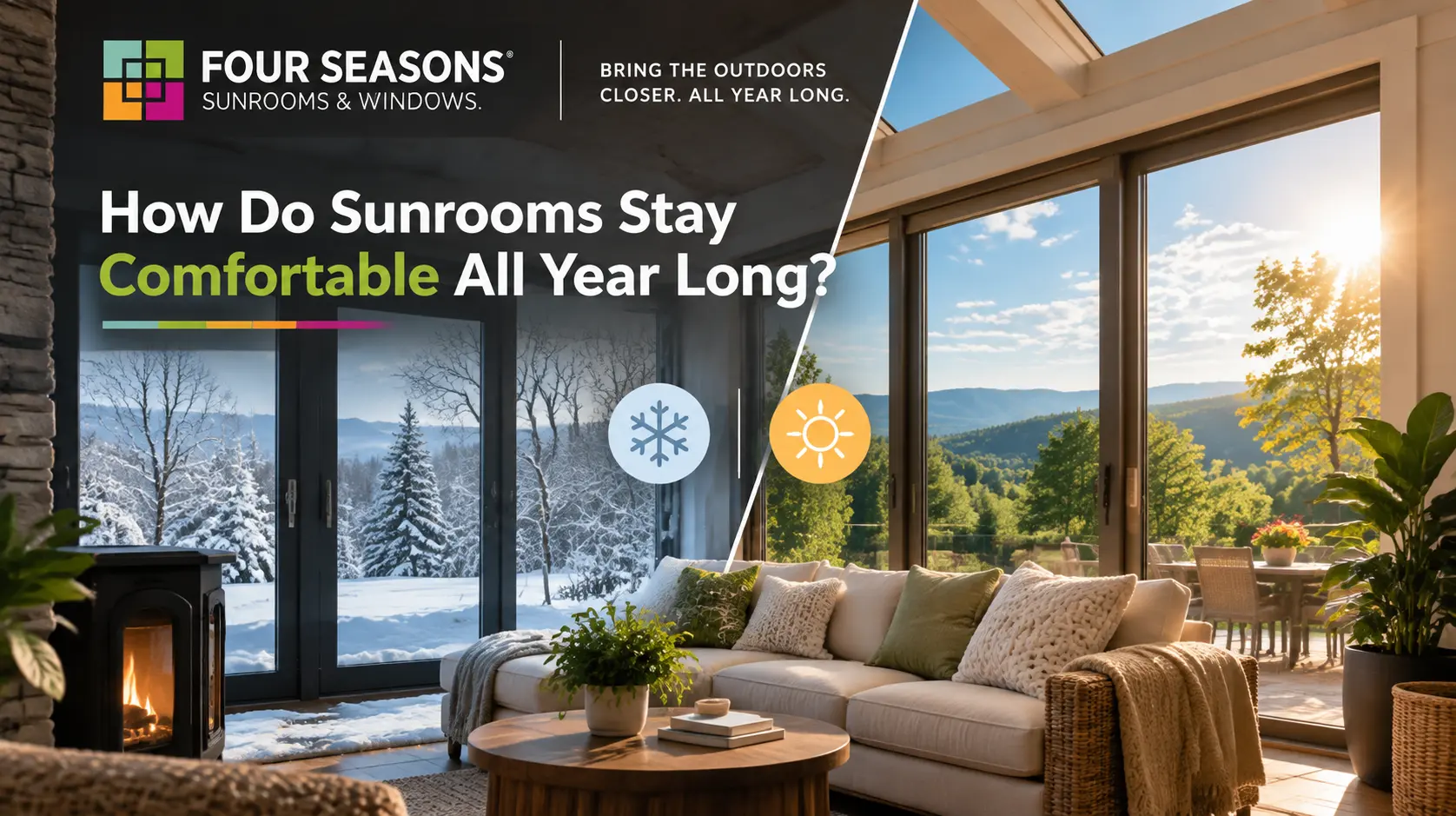
A sunroom sounds perfect until February hits and the space becomes a frozen greenhouse. Or July arrives, and it turns into a sweatbox. The difference between a seasonal porch and a true year-round room comes down to how the structure handles temperature extremes, ventilation, and energy loss.
Here’s what actually keeps a sunroom comfortable through Hudson Valley winters and summers and what doesn’t work.
Insulation and Glass Technology
The biggest factor in year-round comfort is the glass. Standard single-pane glass lets heat escape in winter and bakes the room in summer. Low-E glass with argon or krypton gas fills between panes reduces heat transfer in both directions.
Look for these specs when planning a room design:
- U-factor below 0.30 for cold-weather performance
- Solar Heat Gain Coefficient (SHGC) between 0.25-0.35 to block summer heat without losing winter warmth
- Insulated roof panels rated at R-20 or higher
The frame material matters too. Vinyl and fiberglass frames insulate better than bare aluminum. Wood frames offer the best thermal performance but need more maintenance.
Foundation and Floor Insulation
A concrete slab poured directly on grade will radiate cold into the room all winter. Proper foundation work includes rigid foam insulation under the slab and around the perimeter footings.
Heating and Cooling Options
Most sunrooms aren’t connected to the home’s HVAC system. That means you need a dedicated heat source and cooling strategy.
Winter Heating
Electric baseboard heaters work but cost more to run. A ductless mini-split system handles both heating and cooling efficiently. Radiant floor heating is the most comfortable option if you’re building from scratch — it eliminates cold feet and drafts.
Passive solar gain helps during sunny winter days. South-facing sunrooms capture more heat naturally. But you still need backup heat for cloudy weeks and nighttime.
Summer Cooling
Even the best glass can’t block 100% of solar heat. Cooling options include:
- Ductless mini-split air conditioning
- Ceiling fans to move air and reduce perceived temperature
- Retractable shading systems that block direct sun without darkening the room
Don’t rely on portable air conditioners; they struggle in glass-heavy spaces and drive up electric bills.
Ventilation and Seasonal Airflow
Trapped air kills comfort. Operable windows on at least two walls create cross-ventilation. Roof vents or ridge vents exhaust hot air that rises to the ceiling.
Spring and fall are when good ventilation really shines. You can open windows and enjoy fresh air without running heating or cooling. An adjustable shading system lets you control how much sun enters based on the season.
Avoiding Condensation
Poor ventilation leads to condensation on glass during cold months. That moisture damages wood trim and creates mold. Make sure your design includes enough air exchange either through operable windows or a small ventilation fan.
Design Choices That Impact Comfort
A cathedral ceiling with north-facing skylights looks dramatic but heats unevenly and loses warmth faster. A shed-style roof with insulated panels holds temperature better.
Room orientation matters. East-facing sunrooms get morning sun and stay cooler in summer afternoons. West-facing rooms bake all evening during July and August. South-facing spaces maximize winter warmth but need strong shading in summer.
Size affects comfort too. A small 10×12 sunroom heats and cools faster than a sprawling 20×30 addition.
When a Sunroom Won’t Work Year-Round
If your budget only covers a basic three-season structure with single-pane glass and no insulation, don’t expect January comfort. A true year-round room costs more upfront but actually gets used 365 days a year.
Also, if your lot is heavily shaded by mature trees, you lose the passive solar benefit that makes sunrooms efficient in winter. You might be better off with a traditional insulated addition instead.
FAQ
Can I use my sunroom in winter without adding heat?
Not comfortably in the Hudson Valley. Even a well-insulated sunroom needs supplemental heat when temperatures drop below freezing. Passive solar helps on sunny days but isn’t enough on its own.
How much does it cost to heat a sunroom?
Depends on insulation quality and heat source. A poorly insulated room with baseboard heat might add $150-$250 per month in winter. A well-built room with a mini-split system typically costs $50-$100 monthly.
Do I need a permit to add heating or cooling to my sunroom?
Usually yes, especially for electrical work or HVAC installation. Check with your local building department before starting any climate control upgrades.
What’s the best glass for Hudson Valley sunrooms?
Low-E dual-pane glass with argon fill balances insulation and light. Triple-pane glass performs even better but costs significantly more and may be overkill unless you’re in an extremely exposed location.
Can I convert a three-season sunroom to four-season?
Sometimes. You’d need to upgrade the glass, add insulation, improve the foundation, and install climate control. Often it’s cheaper to rebuild than retrofit, depending on the existing structure’s condition.
Ready to plan a year-round sunroom in Wallkill?
We’ve been building Four Seasons sunrooms across the Hudson Valley since 1984, and we’re honest about what works and what doesn’t in this climate. If you’re serious about a space you’ll actually use in January and July, let’s talk through your options and site conditions.
Call 845-339-1787 or visit Hudson Valley Sunrooms to discuss your project.